$4,200 per carat for a natural 1-carat diamond in 2026. $725 per carat for a lab grown equivalent that looks identical under a loupe. That pricing gap isn’t rarity. It’s the residue of a 138-year industry campaign that most jewelers still refuse to name out loud.
I’m Suman Smith, founder of Lux Jewels. I’ve worked in diamonds for over 20 years, and in 2015 I became the first jeweler in Canada to offer lab grown diamond engagement rings. I don’t sell you a diamond on the No-BS Diamond Buying Call. I’m on your side, no matter where you buy.
This page breaks down why diamonds cost what they do. De Beers built the monopoly in 1888. The 1947 “A Diamond Is Forever” slogan turned a marketing pitch into a wedding tradition. Retail markup runs 20% to 400%. Resale value lands at 20% to 60% of what you paid. Every number in this article comes from verifiable industry data, and I’ve sourced each one.
Quick answer
Diamonds are expensive because of four layered forces, not rarity
De Beers built a supply monopoly starting in 1888. The 1947 “A Diamond Is Forever” campaign turned diamonds into a required engagement ritual. Retail markup ranges from 20% to 400% depending on the stone and the seller. Demand stays high because 80% of Western brides receive diamond engagement rings. Gem-quality natural diamonds are real and beautiful, and the pricing is engineered, not natural.
Last updated: April 2026. Pricing data verified against Leon Diamond January 2026 market report, Rapaport, and IDEX Diamond Index.
Ready to know what you're looking at?
$199 | 30 minutes | Video call
The first and only service of its kind in the world Pricing subject to change. Confirm current rate at stan.store/luxjewels before booking.
Are Diamonds Actually Rare?
Diamonds are not geologically rare. Gem-quality diamonds represent only 30% of mined output according to the Gemological Institute of America. Rubies, emeralds, tanzanite, and pure natural gold are all rarer than diamonds. The rarity story is commercial framing, not geology.
Carbon is the fourth most abundant element in the universe. Diamond is crystallized carbon. You’d think carbon plus pressure plus time equals scarcity. The math doesn’t work that way. At least 53 known diamond-producing locations exist globally, and mining output reached 116 million carats in 2021 according to Statista. That’s not rare.
What creates price is the gem-quality filter. Most diamonds coming out of the ground look nothing like ring stones. They’re too small, too included, or too discolored. Those stones become industrial grade and end up ground into dust for cutting tools. Only the top 30% qualify as gem grade.
The rarity framing persists because retailers benefit from it. If you believe diamonds are hard to find, a high price tag feels justified. The geological reality is different, and understanding that reality gives you a stronger position at the point of purchase.
How Common Are Diamonds Geologically?
Diamonds form under extreme heat and pressure around 100 miles below the Earth’s surface. Volcanic activity brings them up through kimberlite pipes. Major mines operate in Russia, Botswana, Canada, Australia, and South Africa. Compared to emeralds, rubies, and tanzanite, diamonds are the most abundant of the named precious stones. Pure natural gold is also scarcer per gram than gem-quality diamond. Red beryl, a gemstone most buyers have never heard of, is geologically rarer than any white diamond on the market.
What Percentage of Mined Diamonds Are Gem Quality?
Only 30% of mined diamonds meet gem-quality standards suitable for jewelry. The GIA sorts rough stones by size, shape, quality, and color. Stones with poor color, heavy inclusions, or small size get classified as industrial. These make up 70% of mined output and sell for a fraction of gem prices. The 30% gem-quality fraction then gets cut and loses up to 50% of its weight during polishing. That final yield is what the retail market prices, which means the raw-to-retail conversion rate on the gem side of the industry is brutal compared to how the supply chain gets described in marketing materials.
Who Controls Diamond Prices?
De Beers controlled 80% to 85% of global rough diamond distribution from 1888 until 2000 according to Wikipedia. Its control dropped to 63% by 2000 and under 50% by the 2020s. The company still sets pricing trends through sightholder auctions and cut prices in January 2026.
Cecil Rhodes founded De Beers Consolidated Mines in 1888 after consolidating control of the Kimberley diamond fields in South Africa. The strategy wasn’t complicated. Buy up every mine you find. Control what enters the market. Release slowly. Keep prices stable and high. By 1926 Ernest Oppenheimer took over and built the Central Selling Organisation, which routed nearly every rough diamond on Earth through one London office.
The cracks started showing in the 1990s when mines in Russia, Canada, and Australia sold outside the De Beers channel. A US class-action lawsuit settled in 2004 formally ended the monopoly era. The marketing machinery survived, and that’s the part that still shapes 2026 prices.
Understanding this history matters because every diamond price you see today traces back to infrastructure De Beers built. The sightholder auction system, the Rapaport pricing sheet, the cultural expectation of a diamond engagement ring, the grading labs that sit between wholesalers and retailers, all of it descends from the architecture of that original monopoly.
How Did De Beers Build the Diamond Monopoly (1888-2000)?
De Beers used four tools: mine acquisition, central selling, strategic stockpiling, and flood-out pricing. If a competitor refused to route through the Central Selling Organisation, De Beers dumped similar stones to crater the rival’s price. The company also bought diamonds during price collapses, such as the Great Depression, to shrink supply and push prices back up. Between 1888 and 2000 De Beers held 80% to 85% of rough distribution. That’s textbook monopoly behaviour, and it worked for 112 years before antitrust action and new supply sources cracked the structure open.
What Was "A Diamond Is Forever" and How Did It Work?
Copywriter Frances Gerety wrote “A Diamond Is Forever” in 1947 for advertising agency N.W. Ayer, working under a De Beers contract. Advertising Age named it the greatest slogan of the 20th century. The line tied diamonds to permanence and romantic commitment in a way no other product had managed. Diamond engagement ring adoption in the United States went from 10% in the 1930s to over 80% by the end of the 20th century. Japan went from 5% in 1967 to 60% by the 1980s. That’s not a natural trend. That’s an ad campaign that reshaped marriage rituals across two continents.
Does De Beers Still Control Diamond Prices in 2026?
De Beers no longer holds a monopoly, and its pricing signals still move the market. The company cut prices in January 2026 after a difficult 2025 where the 1-carat RAPI declined 11.3% annually according to Leon Diamond’s market report. De Beers guided 2025 production at 20-23 million carats, well below historical highs. ALROSA, the Russian producer, forecasts a 14% production drop to 25-26 million carats in 2026. Supply cuts lead to price support, so buyers face a 2026 where the recent decline slows rather than reverses.
How Much Markup Do Diamond Retailers Add?
Standard diamond retail markup runs 20% to 100% over wholesale. Branded chain stores charge up to 300% keystone pricing. Tiny melee stones carry 200% to 400% markup. Large 1.5-carat and up diamonds drop to 50% to 150%. The markup tier depends on stone size and vendor type.
Retail markup is where pricing gets personal. The same 1-carat G VS2 round costs $6,000 at a mall chain, $4,500 at an independent jeweler, and $3,200 at an online specialist. Same stone. Same certificate. Different overhead structures, different margins.
I’ll be direct: the rent a retailer pays is a cost center, not a value you receive. When a store pays Yaletown or Fifth Avenue rent, that cost lands in your price. At Lux Jewels I run online-only, which is why my clients pay less for equivalent Type IIa quality.
The table below shows the markup tiers by stone category so you walk into any purchase conversation knowing where the vendor sits on the scale.
Typical Diamond Markup By Category (2026)
Stone Category | Typical Markup | Context |
Melee (under 0.10 ct) | 200% to 400% | High volume, low per-stone value, inflated percentages |
0.25 to 0.75 carat | 100% to 200% | Standard bridal range at mall chains |
1 carat (standard bridal) | 50% to 150% | Most shopped, highest competition, most online pressure |
1.5 carats and up | 50% to 100% | Larger absolute dollars, smaller percentage margin |
Branded/designer chain | Up to 300% | Name premium, not stone quality |
Online specialist retailers | 10% to 40% | No showroom overhead, direct wholesale access |
Independent consultation model | 15% to 35% | No commission to other sellers, virtual only |
What Is the Typical Wholesale-to-Retail Markup?
The standard wholesale-to-retail markup on diamonds runs 20% to 100% according to Teach Jewelry’s 2025 industry analysis. This covers the retailer’s rent, insurance, staff, and security. A physical store needs that margin to pay the bills. An online-only seller doesn’t. That’s why the gap between mall-chain and online prices reaches 40% on the same stone. The wholesale benchmark most dealers reference is the Rapaport price list, which publishes weekly updates and serves as the trading sheet for the global diamond industry.
Why Do Branded Chain Stores Charge 200% to 300% Markup?
Branded chain stores charge what the industry calls keystone pricing, which doubles the wholesale cost, or triple-keystone, which triples it. You’re paying for the name, the packaging, the in-store experience, and the advertising budget. A Tiffany or Cartier markup isn’t about stone quality. It’s brand premium. The same GIA-certified 1-carat G VS1 costs 2 to 3 times more at a flagship store than at an online specialist. Neither stone is better. You’re paying for the box, the bag, and the Fifth Avenue rent.
How Do Online Retailers Undercut Brick-and-Mortar?
Online retailers skip three cost buckets: rent on retail real estate, floor staff salaries, and physical inventory financing. That’s often 30% to 40% of a traditional store’s operating cost. Online specialists also ship direct from cutters or wholesalers, which removes one layer of the supply chain. The trade-off is no in-person viewing, no tactile evaluation, and variable customer service quality. A paid consultation with an independent expert bridges that gap without the retail markup and without the pressure of a showroom sales floor.
Got a diamond quote that feels off?
On the No-BS Diamond Buying Call, I review stones and certificates from any seller. I don’t sell you a diamond on this call. I’m on your side, no matter where you buy.
$199 | 30 minutes | Video call
The first and only service of its kind in the world. Pricing subject to change. Confirm current rate at stan.store/luxjewels before booking.
Why Are Diamonds So Valuable If They're Not Rare?
Diamonds carry value from four layered costs: mining capital, cutting expertise, marketing investment, and sustained demand. Mining requires billions in infrastructure. Cutting loses 50% of rough weight. Marketing sustains the engagement ring ritual. Demand outpaces gem-quality supply by enough to hold prices above geological value.
Value and rarity are separate concepts. A diamond is common in the ground and expensive in the showroom because enough people want one badly enough. That’s the diamond market in one sentence.
Every diamond you see in a ring passed through at least five hands: miner, sorter, cutter, wholesaler, retailer. Each hand adds cost. Each hand needs financing. The final price includes something you can’t see on the receipt, which is the cumulative effect of 80 years of “A Diamond Is Forever” advertising running in your head before you walked into the store.
The honest answer to why diamonds stay expensive without being rare is that expensive is an outcome, not an input. The industry decided on expensive, then built the supply management, marketing, and distribution infrastructure to deliver that outcome. Breaking that down into its component costs shows you which parts of the price reflect real economic activity and which parts reflect accumulated narrative.
What Costs Go Into Bringing a Diamond to Market?
Mining operations cost billions to develop. An average diamond takes 6 to 12 months to sell at retail, and every day in inventory costs the jeweler financing fees. Cutters lose up to 50% of rough weight during polishing, so the starting cost per finished carat is already double the raw input. Grading by GIA adds $120 per stone and 2 to 4 weeks of additional financing. By the time a diamond hits a case, it has accumulated mining cost, cutting cost, grading cost, transport cost, insurance, and interest on every day of holding. That full stack is real. It explains part of the price.
How Much of Diamond Pricing Is Marketing?
Marketing isn’t a line item on a diamond invoice, and it’s baked into every price. De Beers spent decades funding global ad campaigns that built the engagement ring as a cultural requirement. The same Japanese market went from single-digit adoption in 1967 to 60% by the 1980s because of direct N.W. Ayer advertising. That demand didn’t exist before the ads ran. Demand that wouldn’t exist without marketing is marketing-funded demand. A meaningful portion of the diamond premium over other gemstones is the cumulative cost of 80 years of advertising psychology, now paid for by every buyer who walks into a store today.
Why Does Cutting Cost So Much?
Cutting a diamond is one of the most technical skilled-labor jobs in any luxury industry. A master cutter studies a rough stone for hours or sometimes weeks before the first facet gets placed. One bad decision cracks a $50,000 rough into $5,000 of fragments. Modern cutters use laser tools and three-dimensional modeling software like Sarin to maximize yield, and that equipment costs hundreds of thousands of dollars per station. The skilled-labor cost per finished carat is high because training a cutter takes years, and only a fraction of trainees develop the precision required to work larger stones. This expertise cost is real, and it explains part of the price gap between a budget poorly-cut diamond and a well-cut stone of the same grade.
How Have Diamond Prices Changed Over 100 Years?
Diamond prices rose steadily from 1900 to 2016, with most growth explained by inflation. The 1-carat average in 1960 was $2,700 per Diago Switzerland data. In 2026 it averages $4,200 per carat per Leon Diamond. Recent years show decline: RAPI fell 11.3% in 2025.
The price story of diamonds looks like a slow climb followed by a sharp recent drop. Understanding the arc helps you evaluate any quote you’re handed today. A jeweler telling you “diamonds always go up” is working from an incomplete chart.
The three-era breakdown below covers the monopoly era, the steady growth period, and the recent decline. Each era carries specific market conditions that shaped buyer outcomes, and the 2026 market looks more like 1970 than 2010 in terms of price direction.
1900s to 1960s - Monopoly Era Pricing
De Beers held near-total control of rough diamond supply from the 1890s through the 1960s. Prices during this era moved in one direction: up. The company stockpiled during recessions and released slowly during booms. The 1947 “A Diamond Is Forever” campaign locked in Western demand, and the 1960s push into Japan opened a second major market. A 1-carat diamond in 1960 cost roughly $2,700 per Diago Switzerland’s historical price evolution data, which in today’s dollars translates to a much higher figure once inflation gets factored in.
1970s to 2010s - Steady Price Growth
Prices tenfolded from 1960 to 2020 according to Diago’s tracking. A significant portion of that growth came from inflation, and real appreciation happened too, driven by sustained marketing, the opening of China and India as new markets, and the decline of older mines. The 2008 financial crisis dropped global diamond jewelry sales by about 25%, and the 2020 pandemic cut Q2 retail sales by 35%. Both markets recovered. During this full 50-year arc, the industry consolidated, with fewer wholesalers, cutters, and retailers surviving each decade.
2020 to 2026 - The Recent Price Decline
The RAPI 1-carat index fell 11.3% across 2025 according to Leon Diamond’s January 2026 report. December 2025 alone saw a 2.3% drop. The IDEX Diamond Index closed January 2026 at 84.97. De Beers cut prices in January 2026 to stay competitive against lab grown alternatives. Lab-grown captured 20% of the global diamond market in 2025 per the same Leon Diamond data, with projected growth to $33.54 billion in 2026. India implemented a 50% import tariff in August 2025 that added friction to the trade. Fancy colored stones moved in the opposite direction. Pink diamonds appreciated 391% since 2005. Blue diamonds gained 242%.
What Do Diamonds Actually Resell For?
Diamonds resell for 20% to 60% of the retail purchase price according to Diamonds.Pro and StoneAlgo industry data. The average lands close to 50% of the lowest available retail. Appraisal values sit much higher because they measure insurance replacement cost, not market value.
Resale is where diamond buyers get their reality check. The 2-carat you paid $18,000 for five years ago? You’ll be offered $5,000 to $9,000 today. Not because the stone got worse. Because the retail markup you paid doesn’t come back when you sell.
This is also why “diamonds are an investment” advice misleads most buyers. Gem-quality diamonds hold partial value, and they’re illiquid, they face heavy percentage losses on the secondary market, and only fancy color stones have shown consistent appreciation.
I tell my consultation clients the same thing every time: buy a diamond because you love it, not because you plan to sell it. Expecting a resale return comparable to what you paid sets you up for disappointment that isn’t the stone’s fault.
Diamond Resale Value Benchmarks (2026)
Source | Typical Resale Range | Sample Basis |
Diamonds.Pro (US) | 20% to 60% of retail | Consumer-to-business sales |
StoneAlgo diamond study | ~50% of lowest retail | Cross-platform analysis |
Ethica Diamonds (UK, 2026) | 25% to 30% typical | UK market data |
myGemma (international) | 25% to 50% | Professional diamond buyer |
DJP Diamonds | 20% to 60% | Retail and wholesale average |
Why Is the Resale Value So Much Lower Than Retail?
A retail diamond price includes the retailer’s markup, which you don’t recover when you sell. The buyer on the resale end, typically a jewelry dealer, needs their own margin to resell the stone profitably. That’s two separate markups working against you. A 1-carat bought retail at $6,000 wholesales at $3,500, and a secondary buyer pays around $2,500 to resell it at $4,000. You lose the original retail markup plus the secondary dealer’s margin. This is why diamonds depreciate like cars the moment you leave the store.
What's the Difference Between Appraisal Value and Resale Value?
Appraisal value measures how much it costs to replace the diamond through retail channels. Resale value measures how much a buyer pays for your specific diamond. Appraisals run high because they’re designed for insurance, where the insurer wants a full replacement number and the premium scales with the appraised amount. Resale is the market number. A diamond appraised at $12,000 resells for $3,000 to $6,000. The appraisal isn’t wrong, it’s answering a different question than “what will someone give me for this today?”
Are Diamonds a Scam?
Diamonds are not a scam. The product is real, durable, and beautiful. The marketing around pricing, rarity, and emotional necessity is engineered. Calling diamonds a scam oversimplifies. Calling diamond retail a rigged game is accurate. The stones hold value better than most luxury goods and worse than conventional investments.
Here’s where I separate from both the diamond industry defenders and the conspiracy bloggers. A diamond is a real geological object with specific physical properties. It’s the hardest known natural material. Under a proper setting, it returns light like nothing else in the gem world. That part is not manufactured.
What is manufactured is the story around it. The forever framing. The two-month salary rule. The idea that a proposal without a diamond is somehow incomplete. Those are De Beers-authored cultural products. Buying into the ritual doesn’t make you a sucker. Thinking the ritual was inevitable makes you less informed than you deserve to be.
The scam framing gets applied loosely online because the pricing structure feels rigged against buyers, and in a sense, it was engineered to feel that way. The fix isn’t to swear off diamonds. The fix is to shop with eyes open, knowing which forces move the price and which forces don’t.
The Marketing Is Engineered, But the Product Is Real
Natural diamonds are chemically the same whether they came from a De Beers mine or an independent Canadian operation. Lab grown diamonds are chemically the same as mined ones, which the FTC formally confirmed in 2018 after redefining the term. The stone you buy does what the stone is supposed to do: sparkle, survive daily wear, last decades. None of that is fake. What’s fake is the idea that the cultural importance was always there. In 1900 most engagement rings were not diamond. By 2000 diamond engagement rings dominated Western weddings, not because of geology, but because De Beers spent 80 years and billions of dollars making it so.
Where the Real Risk Lives
The real risk in diamond buying isn’t the diamond itself. It’s the inflated retail price you pay, the appraisal you trust, and the resale shock that hits years later. I’ve seen clients pay tens of thousands of dollars for stones worth a fraction of that figure. I’ve seen appraisals listing values that no resale buyer will ever match. That’s where the rigged part of the game lives. The stone is fine. The pricing infrastructure around it is the problem. Knowing that is the first step to not overpaying, and it’s one reason I opened the No-BS Diamond Buying Call to any buyer regardless of where they’re shopping.
How Do You Stop Overpaying for Diamonds?
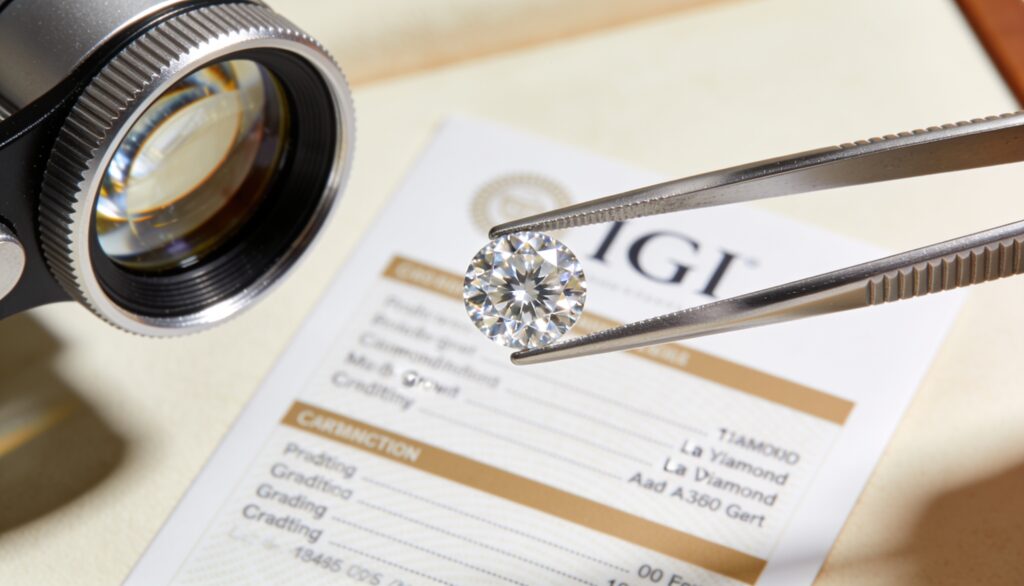
Stop overpaying by verifying the stone against independent benchmarks, comparing quotes across at least three vendor types, understanding which markup tier you’re shopping, asking for the GIA or IGI certificate number, and getting a paid second opinion before committing to any purchase over $3,000.
This is the section every competitor skips. They’ll tell you diamonds are expensive because of rarity and mining cost, then send you to their store. I’m going to give you the tools, even if you end up buying from someone else.
The single most valuable habit is getting a second opinion from someone who doesn’t sell the stone. That’s the business model of the No-BS Diamond Buying Call. I look at your quote, review the certificate, tell you what you’re looking at, and you walk away knowing whether the price is fair. I don’t sell you a diamond on the call.
Get a Second Opinion Before You Buy
A second opinion from an independent expert catches three common problems: overpriced stones relative to their certified grade, misleading certificate differences between labs, and settings that hide inclusions or poor cut. The cost of the consultation is small compared to the typical overpay on a $5,000 to $20,000 diamond. The No-BS Diamond Buying Call at Lux Jewels is the first and only service of its kind in the world, designed specifically for buyers who want independent review before committing. Bring links, photos, ideas. We’ll break it all down together.
Compare Against Rapaport and Online Benchmarks
The Rapaport price list is the industry’s weekly wholesale benchmark. Paid access is expensive, and free tools like StoneAlgo and the Pricescope Diamond Prices Index use similar logic and give you a reasonable comparison point. If a retailer quotes you $8,000 for a 1-carat G VS2 and the online benchmark for the same grade is $5,200, you know you’re paying roughly $2,800 of non-stone costs. That’s fair for a local boutique with strong service. It’s less fair for a mall chain or a pop-up pressure sale with no clear value-add.
Understand the Markup Tier You're Shopping
A $2,000 half-carat engagement ring sits in a different markup tier than a $25,000 3-carat anniversary piece. Small stones carry higher percentage markups and often not worth price-shopping across 3 or more vendors. Mid-range bridal stones, the 0.75 to 2-carat range, have the most pricing transparency and the biggest variation across vendors. That’s where a second opinion pays off the most. Large stones have lower percentage markups and larger absolute dollar differences, so getting specifics on the certificate and the cut grade matters more than chasing the lowest quote.
Consider Lab Grown for the Same Look at 70% Less
Lab grown diamonds cost 70% to 80% less than mined diamonds of comparable grade in 2026. A 1-carat G VS2 natural diamond at $4,200 has a lab grown equivalent around $725 per Leon Diamond’s January 2026 data. The stones are chemically identical, and the FTC confirmed in 2018 that lab grown diamonds meet the legal definition of “diamond.” If your priority is the look and the wear, lab grown gives you more carat weight and better clarity for the same budget. If your priority is long-term resale, natural holds slightly better value on the secondary market, and both categories depreciate significantly from retail. The choice depends on which tradeoff matters to you, and that’s exactly the kind of thing a No-BS consultation walks you through.
Frequently Asked Questions
Are diamonds rarer than gold?
No. Pure natural gold is scarcer per gram than gem-quality diamond. Gold trades around $95 per gram in 2026. A 1-carat gem-quality diamond trades around $840 per gram equivalent, and that figure reflects marketing and markup rather than geological abundance.
Is the two-month salary rule real?
No. The two-month salary rule came from a De Beers marketing campaign in the 1930s and 1940s. It is not a historical tradition. N.W. Ayer, the ad agency behind “A Diamond Is Forever,” created the salary rule to scale spending with income without quoting specific dollar amounts.
Why are lab grown diamonds more affordable than mined diamonds?
Lab grown diamonds skip the mining cost, the multi-layer wholesale chain, and the long capital-financing timeline of rough stone sales. The 2026 price gap lands around 70% to 80% for comparable quality. See our lab grown engagement ring guide for the full breakdown.
Why did De Beers shut down Lightbox?
De Beers closed Lightbox in 2025 after operating it as a containment strategy for lab grown diamonds. Lightbox was capped at $800 per carat regardless of size and was never third-party certified. Ending the line let De Beers signal that even its own lab grown brand wasn’t serious, reinforcing the natural-diamond marketing message.
Do diamonds lose value the moment you buy them?
Yes. A retail-purchased diamond resells for 20% to 60% of the retail price according to industry data from Diamonds.Pro and StoneAlgo. The drop is immediate and reflects the retail markup you paid on the way in. Fancy color diamonds are the main exception to this pattern.
Why do bigger diamonds cost disproportionately more?
Carat weight pricing is non-linear. A 2-carat diamond costs more than twice a 1-carat because larger rough stones are scarcer, harder to find without inclusions, and face less weight loss during cutting. Price jumps cluster at whole-carat thresholds where demand concentrates.
Can you negotiate a diamond price?
Yes, at independent jewelers and at certain chains. Mall chains have tighter markup controls and will discount aged inventory. Online specialists price tight and negotiate less. Knowing the wholesale benchmark gives you the evidence to negotiate effectively without guessing.
Are diamonds a good investment?
No, not for most buyers. Gem-quality white diamonds are illiquid, carry heavy resale loss, and rarely appreciate above inflation. The exceptions are fancy colored diamonds such as pink and blue, where investment-grade stones have gained 242% to 391% since 2005 per Leon Diamond data.
About Suman Smith and Lux Jewels
I’m Suman Smith, founder of Lux Jewels. I’ve worked in the diamond industry for over 20 years. In 2007 I founded Lux Jewels. In 2015 I became the first jeweler in Canada to offer lab grown diamond engagement rings, which puts Lux Jewels over a decade ahead of the major retailers now catching up on the 2015 pioneer curve.
Lux Jewels runs on a simple principle: business of people first, jewelry second. We put relationships before profit. I don’t take commissions from other sellers, and I created the No-BS Diamond Buying Call specifically so buyers have one person in the diamond industry who isn’t trying to sell them a stone. We serve clients across Canada and the United States from our online-only practice, and we ship insured to any address in either country.
If this article changed how you think about a diamond you were about to buy, you’re the exact person this service was built for.
Since 2015, we have been making people smile, hug, kiss, laugh, and cry, in a good way.
Ready to stop overpaying?
Book the No-BS Diamond Buying Call. Bring your quote, bring your certificate, bring the photos the seller sent you. We’ll break it down together.
$199 | 30 minutes | Video call
The first and only service of its kind in the world. Pricing subject to change. Confirm current rate at stan.store/luxjewels before booking.
Explore more from Lux Jewels