It’s the first question almost every couple asks me, and there’s a lot of confusing, sales-driven noise out there. So let me settle it plainly. Are lab grown diamonds real diamonds? Yes. Not “kind of,” not “almost,” not “a good substitute.” A lab grown diamond is a real diamond, and I’ll show you exactly why, including the honest parts most jewellers skip.
I’m Suman, founder of Lux Jewels, and I’ve spent over 20 years in the diamond trade. I started Lux Jewels in 2007, and in 2015 I became the first in Canada to build a business around lab grown diamonds, back when most of the industry was still dismissing them. I’ve handled thousands of both kinds. Here’s the truth, for buyers in the USA and Canada alike.
Quick Answer
Yes, lab grown diamonds are real diamonds. They have the exact same chemical composition (pure crystallized carbon), the same crystal structure, hardness, and optical properties as mined diamonds, and they’re graded by the same labs (IGI, GIA, GCAL). In 2018 the US Federal Trade Commission officially confirmed a lab grown diamond is a diamond. The only real difference is origin: one grew in the earth over billions of years, the other grew in a lab over weeks. A lab grown diamond is NOT a cubic zirconia or moissanite; those are simulants, and a lab grown diamond is the real thing.
Are lab grown diamonds real diamonds?
Yes. A lab grown diamond is a real diamond in every way that matters scientifically. It’s made of the same thing (carbon crystallized under heat and pressure), it has the same hardness of 10 on the Mohs scale, the same refractive index, the same fire and brilliance. Put a lab grown and a mined diamond of the same specs side by side and no one, including me, can tell them apart by eye.
This isn’t a marketing opinion. In 2018 the US Federal Trade Commission updated its definition and removed the word “natural” from what makes a diamond a diamond, formally recognizing that lab grown stones are diamonds, not imitations. The industry fought it for years. The science won. So when someone tells you a lab grown diamond “isn’t a real diamond,” they’re either misinformed or they’re protecting a mined-diamond markup.
What is the difference between lab grown and natural diamonds?
The only real difference is where they formed. A natural diamond grew deep in the earth over one to three billion years and was mined out. A lab grown diamond grew in a controlled facility over a few weeks, using the same recipe of carbon, heat, and pressure that the earth uses. Same ingredient, same process, different kitchen.
Everything a gemologist measures (the 4Cs of cut, colour, clarity, and carat) is graded on the identical scale for both. The honest differences that actually matter to you are three: price (a lab grown costs a fraction of a mined stone of the same look), origin (no mining), and resale value, which I cover in full below. If you want the full side-by-side, read our guide to lab grown vs natural diamonds.
Do lab grown diamonds test as real diamonds?
Yes. A standard diamond tester reads a lab grown diamond as a diamond, because it is one. These testers measure thermal or electrical conductivity, a property that comes from the carbon crystal itself, and a lab grown diamond has the identical crystal. So it passes every basic diamond test that a mined stone passes.
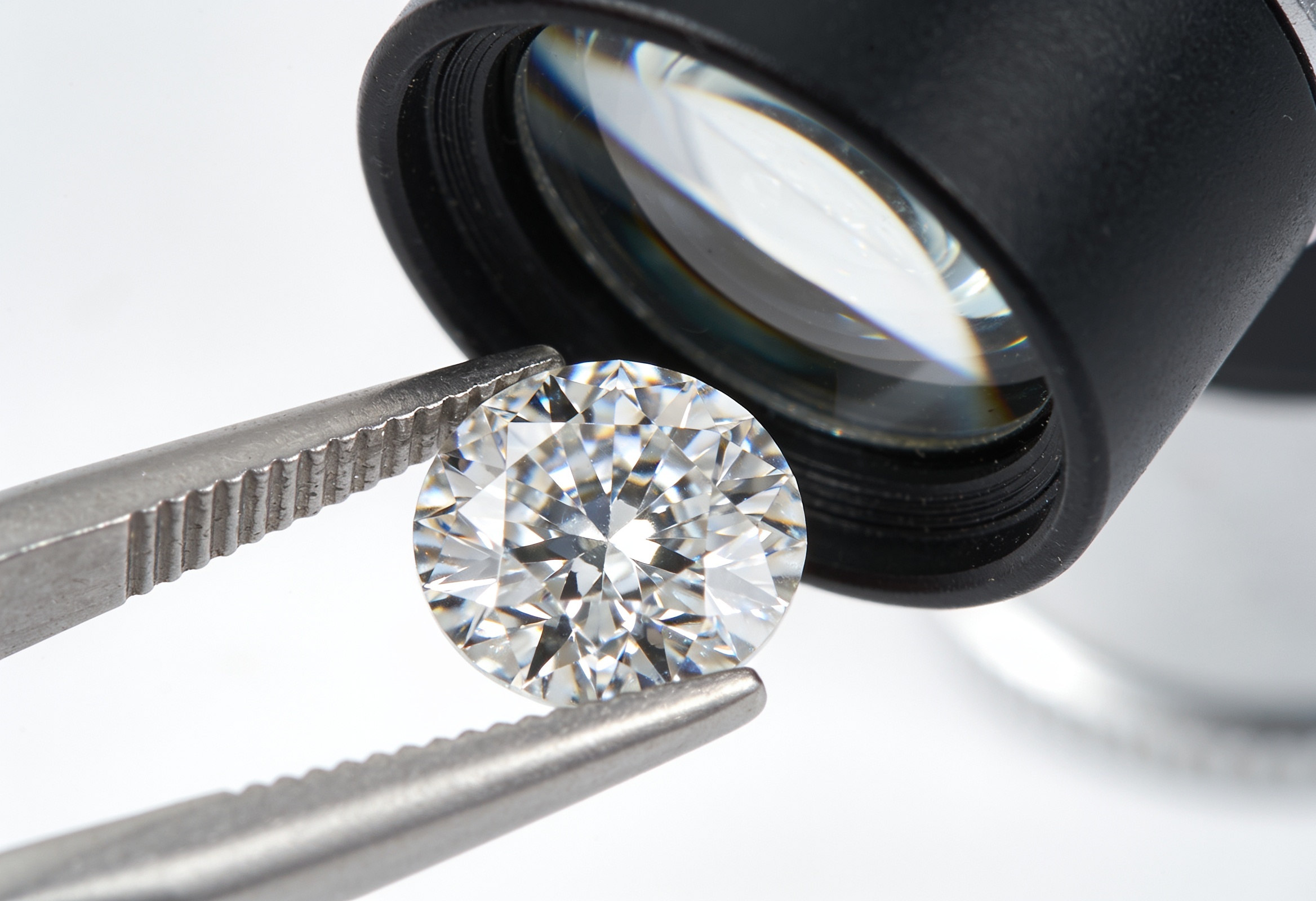
The only way to distinguish a lab grown from a mined diamond is with specialized laboratory equipment that detects tiny growth features, or by reading the laser inscription on the girdle and matching it to the certificate. A regular jeweller with a loupe and a standard tester cannot tell them apart. That’s not a flaw; it’s proof they’re the same material.
Thinking about a lab grown diamond and want a straight answer with no sales pressure? Book a private video call with me and I’ll walk you through real certified stones, the 4Cs, and honest pricing, so you buy with total confidence.
$199 | 30 minutes | Video call
Are lab grown diamonds the same as cubic zirconia or moissanite?
No, and this is the confusion that trips most people up. Cubic zirconia and moissanite are diamond simulants: they look a bit like diamonds but are made of completely different materials (zirconium dioxide and silicon carbide) and are much softer and less brilliant. A lab grown diamond is not a simulant. It’s actual diamond, the same carbon crystal as a mined one.
So the honest ranking is simple: a mined diamond and a lab grown diamond are both real diamonds and are gemologically identical. Cubic zirconia and moissanite are look-alikes that are not diamonds at all. If a stone is a certified lab grown diamond, you’re getting the real thing, not an imitation.
Are lab grown diamonds certified?
Yes. Lab grown diamonds are graded and certified by the same independent gemological labs that grade mined diamonds, including IGI, GIA, and GCAL. The certificate assesses the exact same 4Cs on the exact same scale, and it clearly states the stone is laboratory grown. That certificate is your proof of quality and your protection as a buyer.
I’ve built Lux Jewels on certified lab grown diamonds since 2015, I only work with IGI or GIA certified stones, and I always hand the report to my clients. Never buy any diamond, mined or lab grown, without a certificate from a recognized lab. If a seller can’t produce one, walk away. You can see the quality of the certified stones I set on our diamonds page.
Are lab grown diamonds fake or lower quality?
No, a lab grown diamond is neither fake nor lower quality. “Fake” would mean it’s pretending to be something it isn’t, and it isn’t pretending; it’s a real diamond by every scientific and legal definition. On quality, lab grown diamonds are available across the full range of the 4Cs, from lower grades right up to flawless, colourless, ideal-cut stones, exactly like mined diamonds.
In fact, because lab grown removes the rarity premium, you can usually afford a higher cut, colour, and clarity for the same budget. That’s the part the mined-diamond side doesn’t love to admit. A well-chosen lab grown diamond can be a more beautiful stone on your hand than a mined one at the same price.
Do lab grown diamonds last forever?
Yes. A lab grown diamond is a 10 on the Mohs hardness scale, the same as a mined diamond and the hardest natural material there is. It doesn’t cloud, fade, or wear out. It will look exactly the same in fifty years as it does today, which is why it’s perfectly suited to a lab grown engagement ring you wear every day.
There’s a myth that lab grown diamonds are somehow less durable or “grow cloudy” over time. That’s simply false. Durability comes from the crystal structure, and the crystal is identical. A certified lab grown diamond is as permanent as any diamond on earth.
Do lab grown diamonds hold their value?
Here’s the honest answer most sellers avoid: no diamond is a good financial investment, lab grown or mined. Both lose most of their retail value the moment you buy them, because you’re paying a retail markup you can’t recover on resale. Anyone who tells you a diamond is a smart investment is selling, not advising.
So don’t buy any diamond expecting resale value. Buy it because it’s beautiful and meaningful. The practical advantage of a lab grown diamond is that you spend far less up front, so you’re risking far less money on something you’re buying for love, not profit. That’s the real, honest case for it.
How can you verify a lab grown diamond is real?
Verifying a lab grown diamond is real and correctly represented comes down to the paperwork. Follow these steps and you can’t be fooled.
- Ask for the certificate. A genuine lab grown diamond comes with an IGI, GIA, or GCAL report stating it’s laboratory grown and listing its 4Cs.
- Check the laser inscription. Most certified stones have a tiny report number laser-inscribed on the girdle; match it to the certificate.
- Verify the report online. Enter the report number on the grading lab’s official website to confirm it’s real.
- Buy from a specialist. A jeweller who deals in lab grown diamonds will source certified stones and show you the reports before you commit.
That’s exactly how I work with clients across Canada and the USA: certified stones, reports in hand, and a straight explanation of what you’re buying. If you’re not sure a stone is genuine, a five-minute check of the certificate settles it.
About Suman
I’m Suman Smith, founder of Lux Jewels. I’ve spent over 20 years in diamonds, I founded Lux Jewels in 2007, and in 2015 I became the first in Canada to build a business around lab grown diamonds. I design custom rings for couples across Canada and the USA by video, source certified stones to your exact brief, and tell you the truth about what you’re buying, even when it costs me a sale. That’s the whole point of Lux Jewels: no misleading, no overpaying, no getting talked into a stone that isn’t right for you.
See real certified lab grown diamonds for yourself
The best way to believe lab grown diamonds are real is to see one, certificate in hand. On a free Discovery Call, I’ll show you certified lab grown stones in your budget, explain exactly what you’re looking at, and answer every question straight. No pressure, no obligation, wherever you are in Canada or the USA.
Frequently asked questions
Are lab grown diamonds real diamonds?
Yes. They have the same chemical composition, crystal structure, hardness, and optical properties as mined diamonds, and they’re certified by the same labs (IGI, GIA, GCAL). The US FTC officially confirmed in 2018 that a lab grown diamond is a diamond. The only difference is origin.
Do lab grown diamonds test as real on a diamond tester?
Yes. A standard diamond tester reads a lab grown diamond as a diamond because it has the identical carbon crystal. It passes every basic test a mined diamond passes. Only specialized lab equipment can tell them apart.
Are lab grown diamonds the same as cubic zirconia or moissanite?
No. Cubic zirconia and moissanite are simulants made of different materials, softer and less brilliant. A lab grown diamond is real diamond, the same carbon crystal as a mined one, not a simulant.
Are lab grown diamonds fake?
No. A lab grown diamond is not fake or an imitation; it’s a real diamond by every scientific and legal definition. It’s available across the full quality range and can look identical to a mined stone on the hand.
Are lab grown diamonds certified?
Yes. They’re graded by the same labs as mined diamonds (IGI, GIA, GCAL) on the same 4Cs scale, and the report states the stone is laboratory grown. Always buy a certified stone and verify the report number online.
Do lab grown diamonds last forever?
Yes. A lab grown diamond is a 10 on the Mohs hardness scale, the same as a mined diamond. It doesn’t cloud, fade, or wear out, and it’s ideal for daily wear in an engagement ring.
Do lab grown diamonds hold their value?
No diamond, lab grown or mined, is a good investment; both lose most retail value at resale. The advantage of lab grown is that you spend far less up front, so you risk far less on something bought for love, not profit.