You can spot many fakes at home with simple checks, the fog test, the water test, reading the setting, but the only truly definitive answer comes from a jeweller’s loupe, a diamond tester, or a lab report. Below are nine at-home tests you can try today, plus the professional tests that settle it for sure in 2026.
I’m Suman Smith, founder of Lux Jewels. I started this as Canada’s first lab grown diamond company back in 2015, and I’ll be honest about what these home tests can and can’t tell you.
Quick Answer
To tell if a diamond is real, try the fog test (a real diamond clears almost instantly), the water test (a diamond sinks), and check for a certificate. These hint at the answer, but only a jeweller’s loupe, an electronic diamond tester, or an IGI/GIA report is truly definitive. Note: a lab grown diamond is real and passes all diamond tests.
9 at-home tests to tell if a diamond is real
These are quick and need nothing fancy. Treat them as clues, not proof, since a good fake can pass one or two.
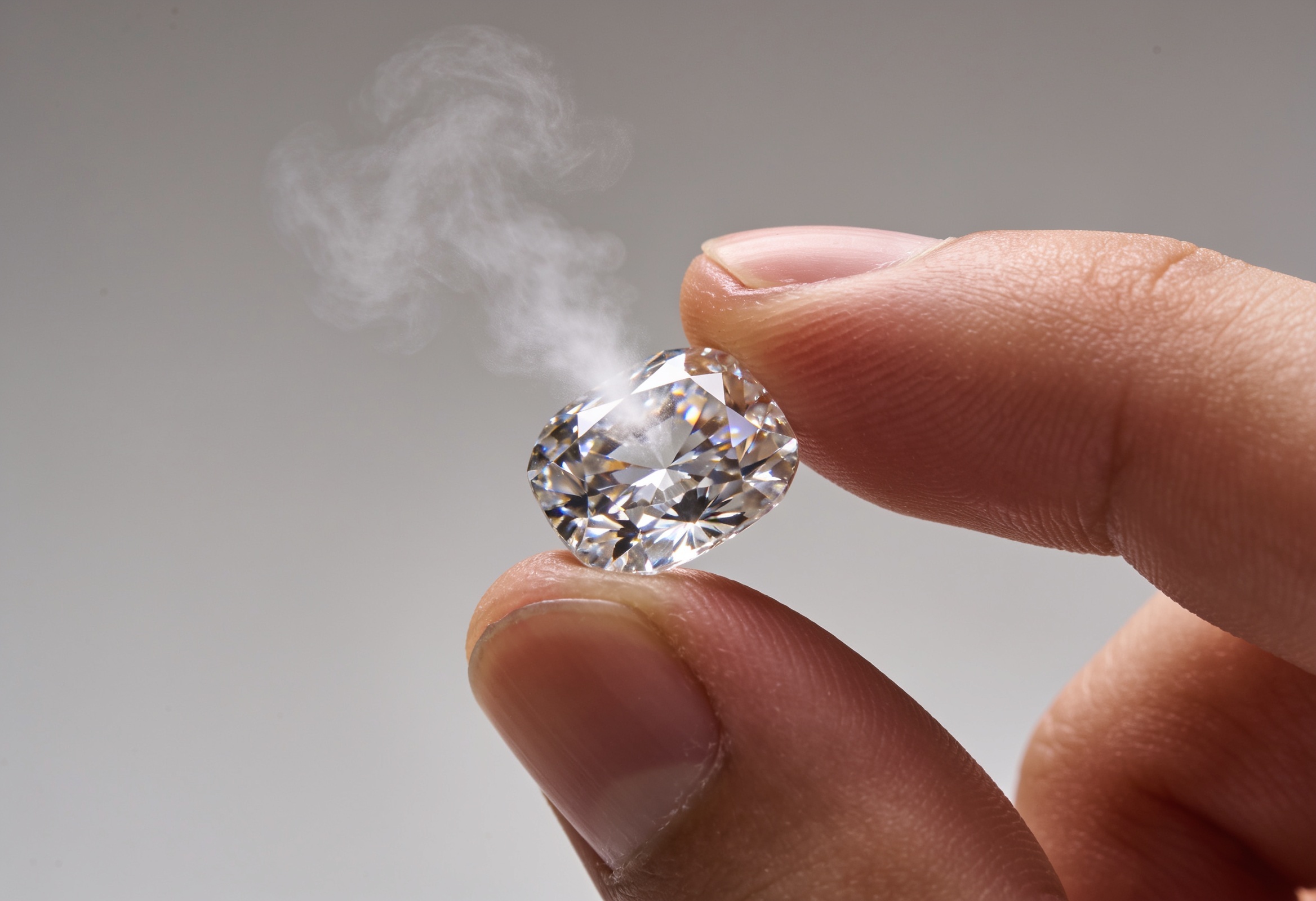
- Fog test: breathe on the stone. A real diamond clears almost instantly because it disperses heat; a fake stays fogged longer.
- Water test: drop it in a glass of water. A real diamond is dense and sinks fast; many fakes float or sink slowly.
- Read the setting: a real diamond is rarely set in low-grade metal. Look for gold or platinum stamps (10K, 14K, 18K, PT, 950).
- Newspaper / dot test: place a loose stone over text. A real diamond bends light so much you can’t read through it clearly.
- Sparkle test: a diamond returns white light (brilliance) and coloured flashes (fire). A fake often looks dull or shows rainbow glare.
- Heat test: diamonds handle heat without shattering, but this risks damage, so it’s better left to professionals.
- Check for scratches: diamonds are the hardest material, so a genuine old diamond rarely shows surface scratches.
- UV light: many (not all) diamonds glow blue under UV. No glow doesn’t mean fake, but a strong blue is a good sign.
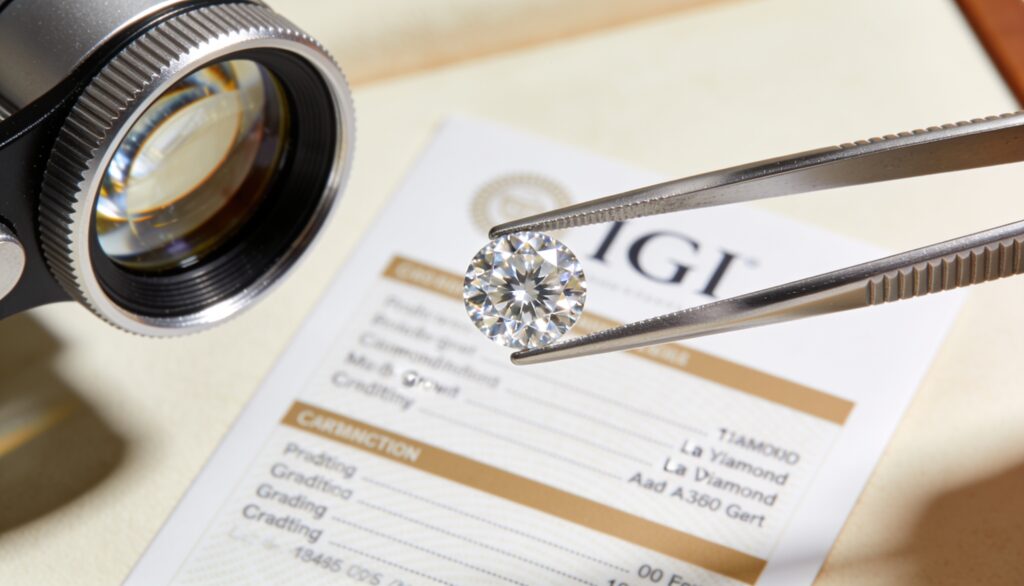
- Look for a certificate: a real diamond usually comes with an IGI or GIA report. No paperwork is a red flag.
Which tests are truly definitive?
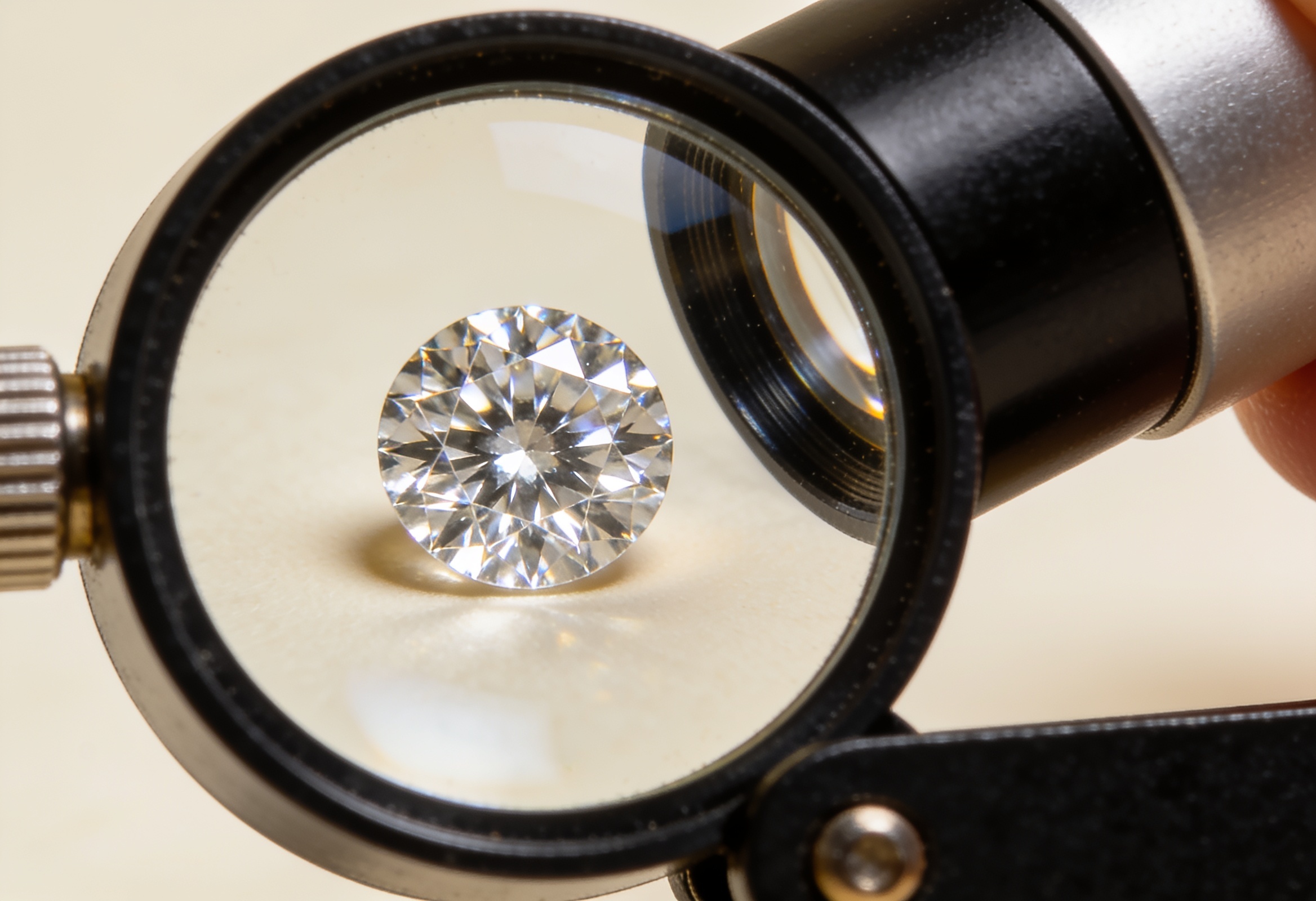
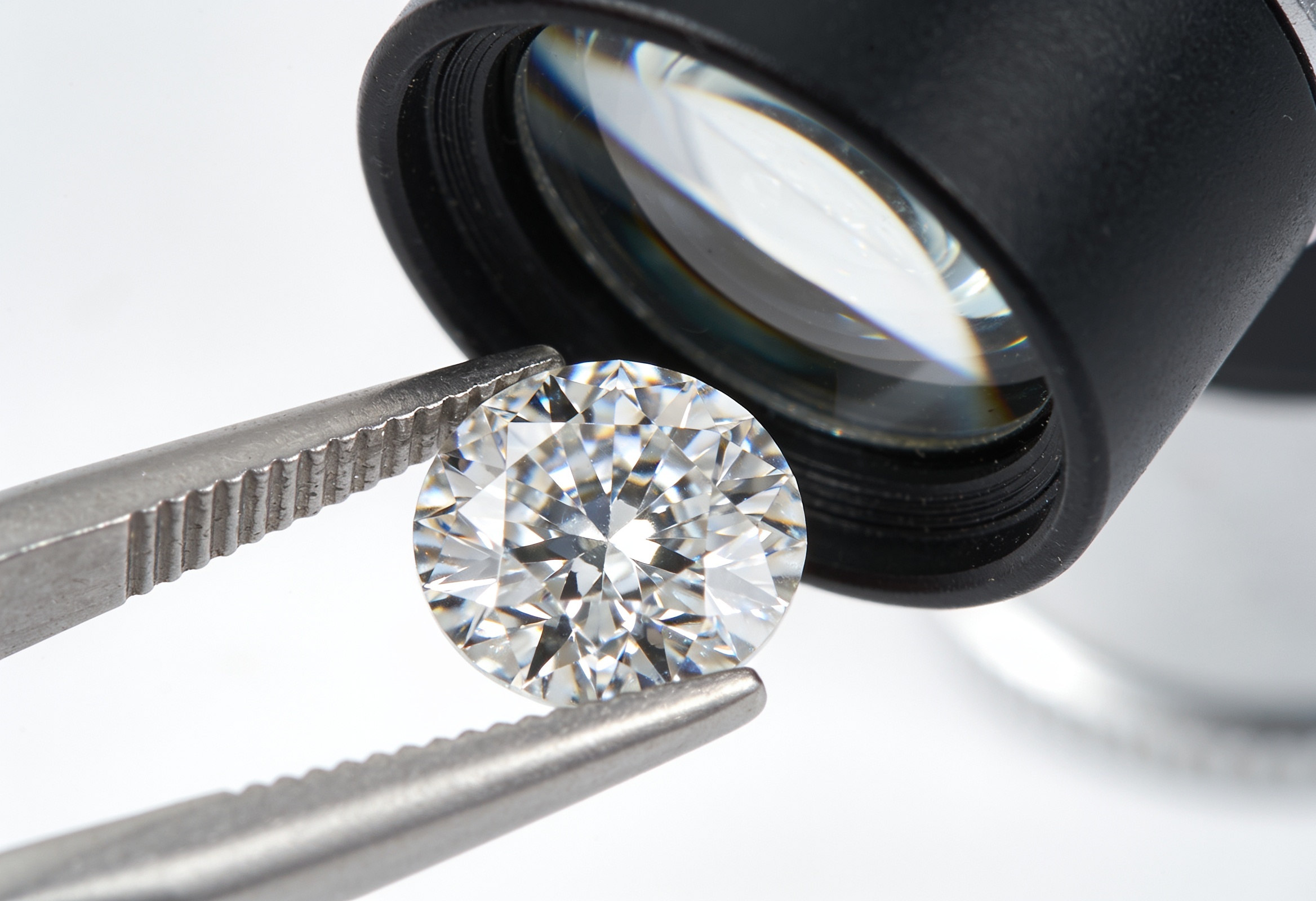
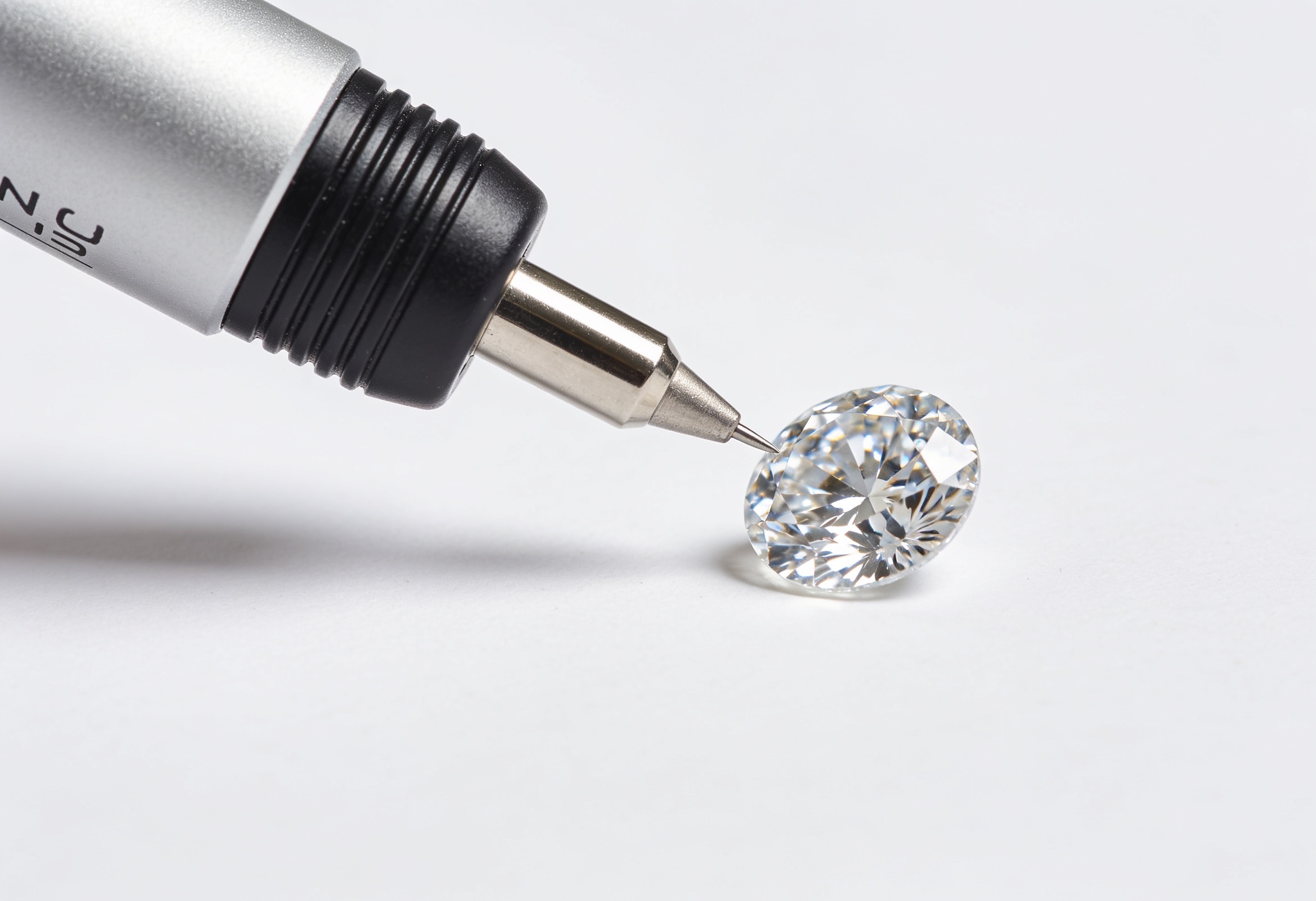
Home tests narrow it down, but three things give a real answer: a jeweller examining the stone under a loupe for natural characteristics, an electronic diamond tester that reads thermal or electrical conductivity, and an IGI or GIA grading report. If you want certainty, take the piece to a trusted jeweller, most will test a stone for you quickly.
How to spot common fakes (CZ and moissanite)
The two most common diamond imitations are cubic zirconia and moissanite. Cubic zirconia is heavier, fails the fog test, and looks glassy. Moissanite is trickier because it’s very brilliant, but it shows extra rainbow “fire” and a slight double-refraction (facets look doubled under magnification) that a standard diamond tester or a jeweller will catch. A combined diamond-and-moissanite tester settles it instantly.
Want certainty before you buy?
Book a private video call with Suman. Every diamond we set is certified by IGI or GIA, so you always know exactly what you’re getting, real, graded, and in writing. No markup games, no sales pressure.
$199 | 30 minutes | Video call
Is a lab grown diamond a real diamond?
Yes, completely. A lab grown diamond is chemically, physically, and optically identical to a mined diamond, just grown in a lab instead of the earth. It passes every diamond test, including an electronic tester, because it is a real diamond. The only way to distinguish lab grown from mined is specialist lab equipment, and the IGI or GIA report will state the origin. So “lab grown” is never a fake, it’s a real diamond that simply costs less.
The honest takeaway
Home tests like the fog and water tests are handy first clues, but for real certainty rely on a loupe, an electronic tester, or an IGI/GIA report. Remember that a lab grown diamond is a genuine diamond and passes every test, so don’t confuse “lab grown” with “fake.” If you’d like a certified stone with the paperwork to prove it, that’s exactly what our consultation is for.
Frequently asked questions
How can I tell if a diamond is real at home?
Try the fog test (a real diamond clears almost instantly), the water test (it sinks), and check the setting and certificate. These are clues only; a loupe, tester, or lab report is definitive.
Does the fog test really work on diamonds?
It’s a useful clue. A real diamond disperses heat fast, so fog clears almost instantly, while many fakes stay fogged longer. It’s not foolproof, so confirm with a tester or jeweller.
What is the most accurate way to test a diamond?
A jeweller examining it under a loupe, an electronic diamond tester reading conductivity, or an IGI/GIA grading report. Any trusted jeweller can test a stone for you quickly.
How do I spot cubic zirconia or moissanite?
Cubic zirconia is heavier, glassy, and fails the fog test. Moissanite is very brilliant with extra rainbow fire and doubled facets under magnification. A diamond-and-moissanite tester confirms it.
Is a lab grown diamond real or fake?
Real. A lab grown diamond is chemically and optically identical to a mined one and passes every diamond test, including electronic testers. The IGI or GIA report states its origin.
Related reading: our certified lab grown diamonds, moissanite vs lab diamond, IGI vs GIA certification, and the 4Cs of diamonds.